The Best Firearms for Self-Defense: A Practical Guide Based on Real-World Use
The Best Firearms for Self-Defense: A Practical Guide Based on Real-World Use
You wake up to the sound of glass breaking downstairs at 3 AM. Your heart rate spikes. In that moment, the theoretical debate about home defense becomes a terrifying reality. The firearm you choose isn’t about range day bragging rights; it’s about reliability, controllability, and stopping power under extreme stress. At Illinois Gunshop, we field these questions daily from responsible citizens looking for real answers, not marketing hype. Let’s cut through the noise and talk about what actually works.
The Modern Defensive Handgun: Striker-Fired 9mm Dominance
The striker-fired 9mm pistol is the standard for a reason. It offers a consistent trigger pull, a simple manual of arms (often no external safety to fumble with), and a proven track record. The 9mm cartridge itself has evolved; modern defensive loads like Federal HST 124-grain or Speer Gold Dot 147-grain offer excellent terminal ballistics with manageable recoil, allowing for faster, more accurate follow-up shots. Capacity is a key advantage—a standard Glock 19 holds 15+1 rounds. For Illinois residents navigating capacity regulations, we stock compliant models and can advise on local considerations. When you’re looking at options like the Smith & Wesson M&P9 M2.0, SIG Sauer P320, or the ubiquitous Glock 19, you’re choosing platforms trusted by military, law enforcement, and civilians alike. You can browse our handgun selection to see what’s in stock and ready to ship.
The Home Defense Shotgun: Unmatched Stopping Power at Close Quarters
For a dedicated home defense tool, nothing delivers immediate psychological and physical deterrence like a 12-gauge shotgun. The sound of a pump-action being racked is universally understood. More importantly, a load of #4 buckshot provides devastating stopping power with less risk of over-penetration through drywall compared to a rifle round or 00 buck. The key is training: a pump-action like the Mossberg 590 or Remington 870 requires you to manually cycle the action, which can be fumbled under stress. A semi-auto like the Beretta 1301 Tactical solves this, offering lightning-fast, reliable cycling. A shotgun’s effective range inside a home is perfect, and with an 18.5-inch barrel, it’s maneuverable in hallways. We recommend pairing it with a weapon-mounted light—a non-negotiable for positive target identification in low light. You’ll find several tactical shotgun options available at Illinois Gunshop.
The AR-15 Platform for Home Defense: Debunking the Myths
Many are surprised to learn that a properly configured AR-15 in 5.56mm/.223 is one of the best home defense choices, despite its “rifle” designation. The common misconception is about over-penetration. In reality, lightweight, high-velocity 5.56 rounds (like 55-grain soft points) tend to fragment and destabilize rapidly upon hitting drywall, often posing less of a over-penetration risk than handgun rounds or buckshot. The advantages are significant: extremely low recoil for rapid, accurate shots, high capacity (30-round magazines are standard), and the ability to mount a red dot sight and a powerful white light with ease. A carbine with a 16-inch barrel, or an 11.5-inch pistol-braced firearm (in compliance with current NFA regulations), is highly effective. A model like the Smith & Wesson M&P15 Sport III is a reliable, affordable starting point for a defensive rifle.
Concealed Carry: Balancing Power, Size, and Shootability
Your concealed carry firearm is a compromise, but it shouldn’t compromise on reliability. The goal is the most powerful, shootable gun you can effectively conceal and carry every day. For most, this lands in the “compact” or “micro-compact” 9mm category. The SIG Sauer P365 series revolutionized this space, offering 10+1 rounds in a package smaller than many single-stacks. The Glock 43X, especially with aftermarket Shield Arms 15-round magazines, is another top contender. For those who prefer a slightly larger grip for control, the Glock 19 remains the gold standard of “do-it-all” compacts. Remember, a .380 ACP like the Ruger LCP Max has its place for deep concealment, but the 9mm is the minimum recommended caliber for defensive use. The right holster and belt are as critical as the firearm itself. We can help you navigate these choices at our online store.
Critical Factors Beyond the Firearm: Ammo, Lights, and Training
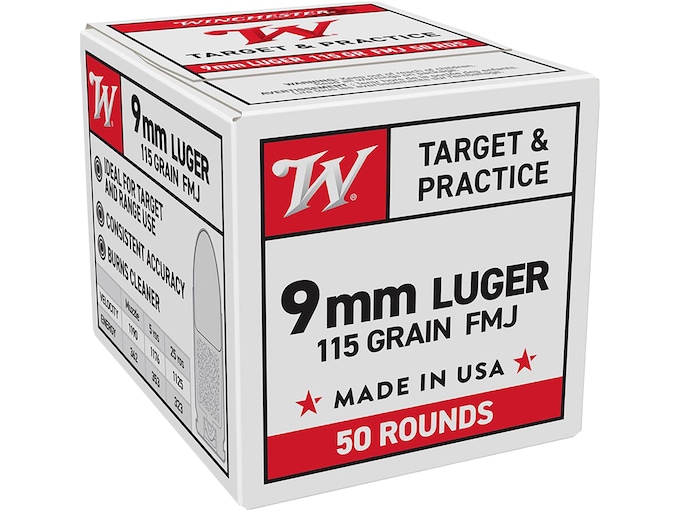
Choosing the gun is only step one. Using FMJ “range ammo” for defense is a serious mistake. You must feed your firearm quality jacketed hollow points (JHPs) designed to expand and transfer energy. Brands like Federal, Hornady, and Speer are the benchmark. A weapon-mounted light is not an accessory; it is essential for identifying a threat in your home. You cannot shoot what you cannot identify. Streamlight and SureFire offer excellent options. Finally, none of this matters without training. Putting 100 rounds downrange quarterly isn’t enough. Seek out professional instruction on defensive shooting, drawing from concealment, and low-light techniques. Your gear, from the gun you buy to the ammo you load, must be proven reliable through practice.
Is a .380 ACP enough for self-defense?
Yes, but with major caveats. Modern .380 ACP defensive ammunition (like Federal Hydra-Shok Deep or Hornady Critical Defense) has improved, making it a viable option from micro-compact pistols like the Ruger LCP Max. However, it is a less powerful round than 9mm with less reliable expansion. It should be considered a minimum for those who need the absolute smallest platform for deep concealment, or for shooters who cannot manage 9mm recoil. If you can conceal and shoot a 9mm, it is the objectively better choice.
What’s better for home defense: a handgun or a shotgun?
It depends on your scenario and training. A handgun (like a full-size 9mm) allows you to have a free hand to open doors, hold a phone, or guide a family member. It’s also easier to secure in a quick-access safe. A shotgun (like a Mossberg 590) offers vastly superior one-shot stopping power and is simpler to operate under stress. However, it requires two hands, has limited capacity, and has more recoil. For a dedicated home defense tool that stays in the bedroom, a shotgun or AR-15 is superior. For a tool you may also carry or need to move through a home with, a handgun is more versatile.
How much should I spend on a reliable self-defense firearm?
Plan on a budget of $500 to $800 for the firearm itself. This range gets you into proven duty-grade models like the Smith & Wesson M&P9 2.0, Canik TP9 series, or a base-model Glock. Spending less often means compromising on durability, sights, or trigger quality. Remember, this is just the start. Factor in at least $100 for a quality holster (for carry), $150+ for a weapon light, $100 for a quick-access safe, and $30-$40 per box of quality defensive ammunition. At Illinois Gunshop, we offer options across this reliability spectrum.
The best firearm for you is the one you can operate reliably under pressure, have immediate access to, and train with consistently. It’s a deeply personal choice that balances capability with your specific living situation and physical needs. We strongly recommend handling several models if possible. Browse our firearms collection at Illinois Gunshop to see the industry-leading models we trust and stock. Have questions about a specific model or Illinois regulations? Our team is here to provide expert guidance.
Last updated: March 25, 2026