Beginner’s Guide to Firearms Training
Beginner’s Guide to Firearms Training
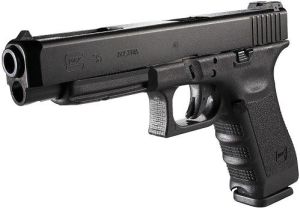
You’ve just purchased your first handgun, a GLOCK 35. It’s unloaded, sitting on your kitchen table, and you realize you don’t know the first thing about safely operating it. This moment of clarity is where effective training begins—not on the range, but with fundamental knowledge.
Master the Four Universal Safety Rules First
Before you touch a live round, these four rules must be automatic. First: treat every firearm as if it is loaded. This mindset eliminates complacency. Second: never point the muzzle at anything you are not willing to destroy. This is about muzzle discipline, whether the gun is in your hand or in a holster. Third: keep your finger off the trigger and outside the trigger guard until your sights are on target and you have made the decision to shoot. This is the single biggest factor in preventing negligent discharges. Fourth: be sure of your target and what is beyond it. A 9mm FMJ can penetrate several interior walls. These aren’t suggestions; they are the absolute foundation. Drill them into your routine until they become unconscious habit.
Choosing Your First Training Firearm
Your first gun for training should be forgiving, reliable, and chambered in a common caliber. For handguns, that means a full-size or compact 9mm like a GLOCK 17 or GLOCK 19. The 9mm offers manageable recoil, affordable practice ammo, and proven effectiveness. Avoid starting with subcompacts or magnum calibers; they are harder to control and can ingrain bad habits. For rifles, a .22 LR like the Marlin 795 is ideal for mastering fundamentals with near-zero recoil and low cost per round. The goal is a platform that lets you focus on technique, not fighting the gun. We stock a curated handguns collection specifically with beginners in mind.
Dry Fire: Your Most Valuable (and Free) Tool
Dry fire practice—safely manipulating an unloaded firearm—is where you build muscle memory. Start by ensuring the gun is completely unloaded, with ammunition in another room. Practice presenting from a holster, acquiring your sight picture, and pressing the trigger straight to the rear without disturbing the sights. Use a small target like a light switch across the room. For striker-fired pistols like Glocks, this is perfectly safe. For some hammer-fired guns, you may need snap caps. This daily 10-minute session will improve your trigger control and sight alignment faster than expensive range trips. Pair it with a quality aftermarket trigger later to refine the feel, but master the stock one first.
Finding Professional Instruction in Illinois
Do not rely solely on YouTube. A certified instructor provides immediate correction you can’t get from a video. Look for a credentialed instructor (NRA, USCCA, Illinois State Police approved) who offers a basic pistol course. A good class will cover state laws, safe handling, fundamentals of marksmanship, and include live-fire on a range. Expect to pay $150-$300 for a quality one-day course. This investment is non-negotiable. They will also help you understand Illinois-specific regulations like FOID card compliance and transportation laws. Bring your own firearm, eye and ear protection, and 100 rounds of factory ammunition. Illinois Gunshop can help you get the right gear before your class.
Building a Sustainable Practice Routine
Consistency trumps intensity. After your initial training, commit to a regular schedule. Start with one range session every two weeks. Begin each session with dry-fire drills, then live fire. Focus on one skill per session: maybe 50 rounds solely on slow, precise shots at 7 yards, or 50 rounds on controlled pairs. Use a shot timer app to introduce realism. Track your progress with targets; don’t just blast away. Quality practice with 100 rounds is better than mindlessly burning 500. As you advance, incorporate movement and shooting from cover. Always end your session by practicing a failure drill—tap, rack, bang—so clearing a malfunction becomes instinctive.
What’s the best caliber for a beginner’s first handgun?
9mm Luger. It’s the standard for a reason: widely available, relatively affordable for practice, offers excellent defensive performance with modern hollow points, and has manageable recoil in a full-size or compact pistol. Starting with a .22 LR for pure fundamentals is also a superb strategy.
How much ammunition should I buy for my first training class?
Most basic pistol courses require 100 rounds of factory new, brass-cased ammunition. Buy 150. The extra 50 rounds are for the inevitable follow-up practice after class, or for any drills you didn’t finish. Never bring reloads or steel-cased ammo to a training course unless specifically approved by the instructor.
Can I legally transport my firearm to a training class in Illinois?
Yes, if you have a valid FOID card. The firearm must be unloaded and enclosed in a case. Ammunition should be transported separately. The most direct route from your home to the range and back is considered lawful transportation. Keep your FOID and driver’s license accessible during transport.
Browse our firearms collection
Last updated: March 27, 2026